
A first job, a little freedom, and growing up at the gun club
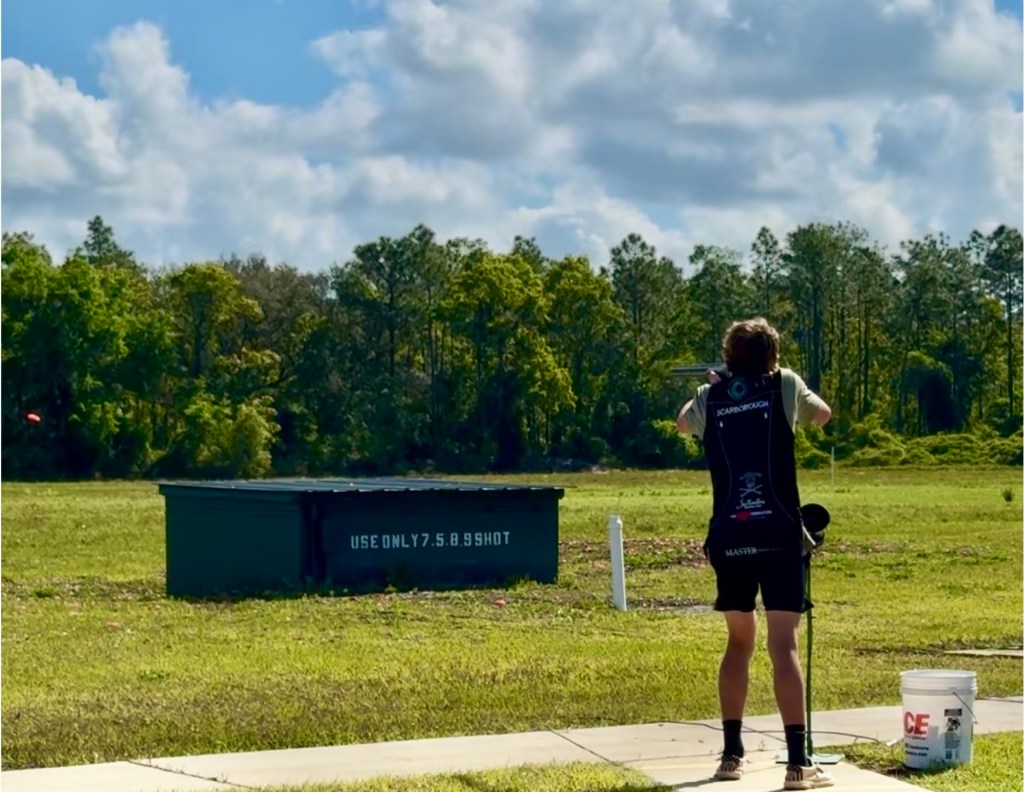
If memory serves, it was the fall of 1988 or 1989.
I was 13 or 14 years old, skateboarding with my friend Ryan Buchar in the driveway of his house at the front of the Southern Farms neighborhood in Shrewsbury, Pennsylvania. I think our buddy Aaron Raby was there too, although he may have joined us a little later.
A car slowed down beside us, and a few older gentlemen rolled down the window.“Hey boys, want to earn some money?”
Apparently, three grown men pulling up beside a couple of kids on skateboards and asking, “Want to make some money?” didn’t raise nearly as many red flags in 1989 as it would today.
“Sure!”
We said yes and followed them.
Of course we did.
On our skateboards.
Just outside our neighborhood was a small gun club with concrete trap houses. The men showed us how to load the bright orange clay targets into the throwing machines, went over the safety rules, and just like that, we had our first jobs.
We had officially become Trap Boys.
More Than a Job
Every Wednesday night, we’d work for a few dollars. During the summers, we’d work entire days during the big state shoots.
But the gun club became much more than a place to earn money.
It became freedom.
We could get there without our parents. We had responsibilities. Adults expected us to show up and do our jobs. At the end of the day, we had our own money in our pockets.
When nobody was shooting, though, it became part of our childhood playground.
Ryan, Aaron and I wandered the fields, explored the woods and generally found ways to entertain ourselves.
Some ideas were better than others.
I remember deciding one day that we’d teach ourselves how to hit golf balls. One of us would hit while the others stood in the field collecting them.
That seemed perfectly reasonable until somebody hit a bad slice and drilled one of the ball collectors.
That concluded our golf program.
Then there was the fire.
The Great Gun Club Fire
One cold, dry winter day, the three of us were walking up Covington Drive—the only hill I remember in Southern Farms—when I found a cigarette lighter along the road.
It barely worked.
I’d roll the flint and get a spark, and every once in a while, a little flame would shoot out.
Naturally, I spent the rest of the walk playing with it.
We eventually made our way to the gun club and down into the trash pit, a dug-out area where the club burned cardboard and trash—and where three teenage boys could throw rocks, break an occasional bottle and generally accomplish nothing productive.
At some point, Aaron said, “Phil, do you smell something?”
Ryan smelled it too.
Then all three of us looked up.
The field was on fire.
Apparently, I had lit a small, clear plastic sandwich bag and hadn’t noticed that it continued burning. The grass was extremely dry, and that tiny flame had taken off.
Two of us ran toward the woods.
One of us ran toward the fire.
Unfortunately, since I was the idiot with the lighter, that one was me.
As I sprinted toward the flames, Billy Scherr’s big Doberman, Bridgette, saw me running and apparently thought we were playing. She came charging over and nearly knocked me down.
I scrambled back up, made it to the fire and started stomping.
Thankfully, it looked worse than it was. The dry grass had burned quickly from the inside out and mostly extinguished itself.
The gun club survived.
My favorite Sebago shoes did not.
I remember fire trucks possibly arriving and me possibly deciding that hiding in the woods wasn’t such a terrible idea after all.
Nearly forty years later, I can’t fully confirm or deny that part of the story.
But there was definitely a lighter.
There was definitely a fire.
And my favorite shoes had definitely seen better days.
I never played with fire again.
An Education You Couldn’t Get in School
The old-timers at the club practically adopted us.
They taught us how to work, expected us to show up and gave us responsibility.
They also taught us a few things our parents probably weren’t hoping we’d learn—like chewing tobacco. Of course, as kids, we started with the under-the-lip kind.
We also occasionally snuck a cold beer from one of those clear plastic “Party Balls” packed in ice after a big shoot.
It was the 1980s.
I’m not recommending this as a modern youth-development program.
There were other lessons too.
One miserably hot August, I worked inside a trap house covered from head to toe in calamine lotion. I had gotten a terrible case of poison ivy while doing a landscaping job with my Uncle Butch.
I had actually made pretty good money landscaping.
Unfortunately, I think I spent more at the hospital getting prednisone than I made doing the job.
My first experience with negative cash flow.
Maybe entrepreneurship really did start early.
My First Side Hustle
I quickly figured out that the best job wasn’t sitting in one trap house all day.
It was being the relief trap boy.
I’d rotate between stations, giving the other boys breaks. Between rotations, I’d pick through the spent shotgun shells, save the good AA and other reloadable hulls, box them up and sell them to shooters who reloaded.
Most of my buddies might make $30 or $40 during a big weekend shoot.
Between my pay and selling hulls, I could sometimes go home with a crisp $100 bill.
At 14 years old, that felt like a fortune.
I didn’t know anything about entrepreneurship, margins or side hustles.
I just knew I’d figured out how to turn something everybody else stepped over into money.
Funny how some things don’t change.
When I shared this story years later, other people started chiming in with their memories. One former Trap Boy remembered doing exactly what I did—working relief and selling reloadable hulls to the shooters.
Apparently, I wasn’t the only young entrepreneur operating at the gun club.
A few people also remembered some of the other activities that took place there when nobody was shooting.
Let’s just say that as we got a little older, the secluded gun club apparently became a convenient place to park with a special date.
I’ll protect the innocent and leave that chapter unwritten.
The Men Who Stopped the Car
The men who stopped that day were Mr. Jim Kreger, Mr. George Landis and Mr. John Elmore.
Mr. Kreger was one of my favorites, he drove a big old motor cycle which was cool. Mr. Landis was old-school, particular and rarely at a loss for words—especially when we did something wrong. Thanks to him, our vocabulary grew almost as quickly as our work ethic. And Mr. Elmore was always helpful and simply a class act.
They probably thought they were simply finding some neighborhood kids willing to load trap machines.
They couldn’t have known what they were giving us.
In 2019, while visiting family, I drove back to the gun club. People were shooting that afternoon, and incredibly, I ran into Mr. John Elmore and my middle school woodshop teacher, Mr. Mike Acierno.
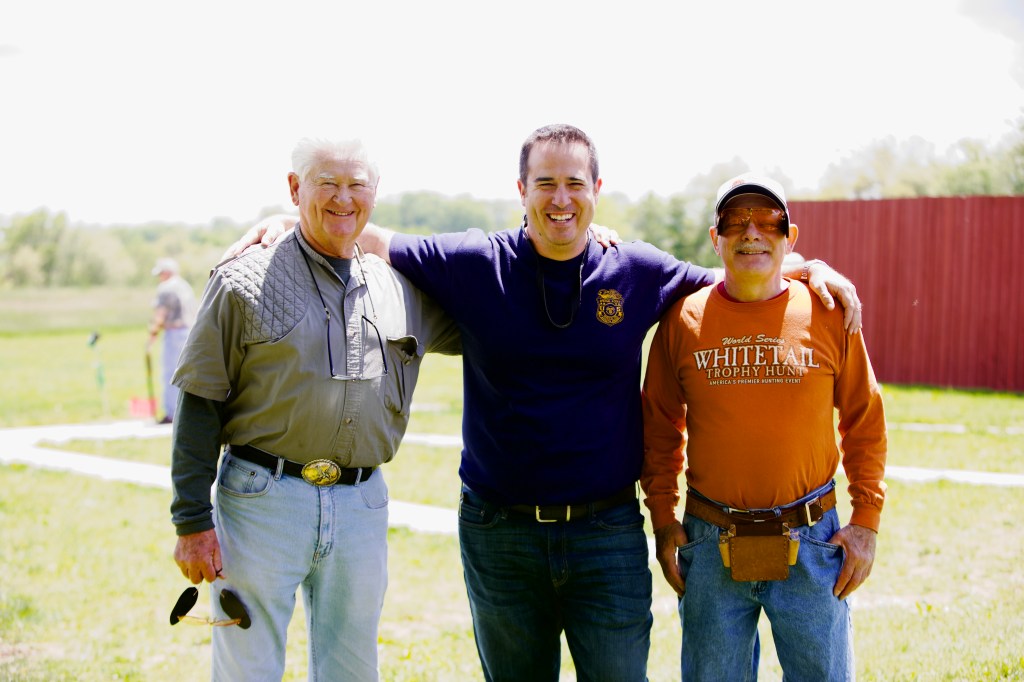
Photo Above: Mr. Elmore on the left, me in the middle, and Mr. Acierno on the right.
Nearly thirty years later, I finally got to thank him.
Thank you for stopping the car.
Thank you for giving us a chance.
Thank you for trusting us with some responsibility.
When I originally shared this story, my mom left a comment that I’ve thought about ever since:
“So many people have had an influence in your life in ways they never imagined and may not even know.”
She’s right.
Writing these stories has made me more aware of those people and has given me a chance to celebrate the remarkable journey—and abundant life—I’ve been blessed to experience.
Full Circle
There’s one more part of this story I couldn’t have appreciated when I was 14.
Back then, I would have loved to actually be one of the shooters.
But shooting wasn’t cheap. You needed the gun, the shells, the targets and the money to participate.
So mostly, I loaded the machines and watched.
Today, things have changed.
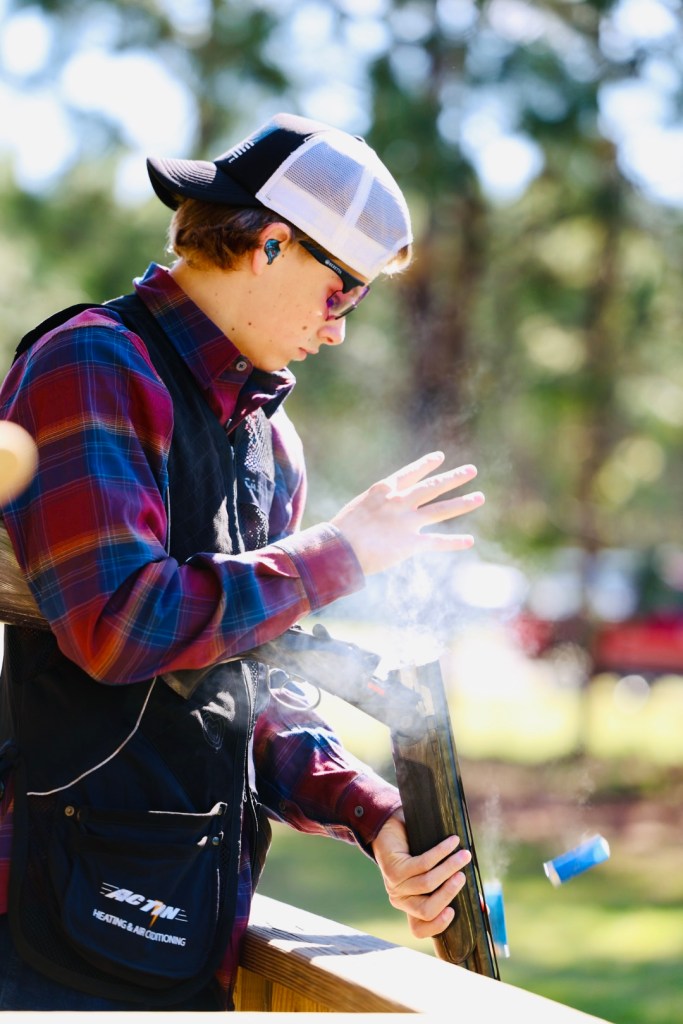
My son has become heavily involved in trap, skeet and sporting clays.
I get to watch him stand on the other side of those machines, doing something I would have loved to do at his age.
And the Trap Boys?
We’re obsolete.
The machines are automated now. Load them with boxes of clays and they throw targets all day without needing some 14-year-old kid sitting underground.
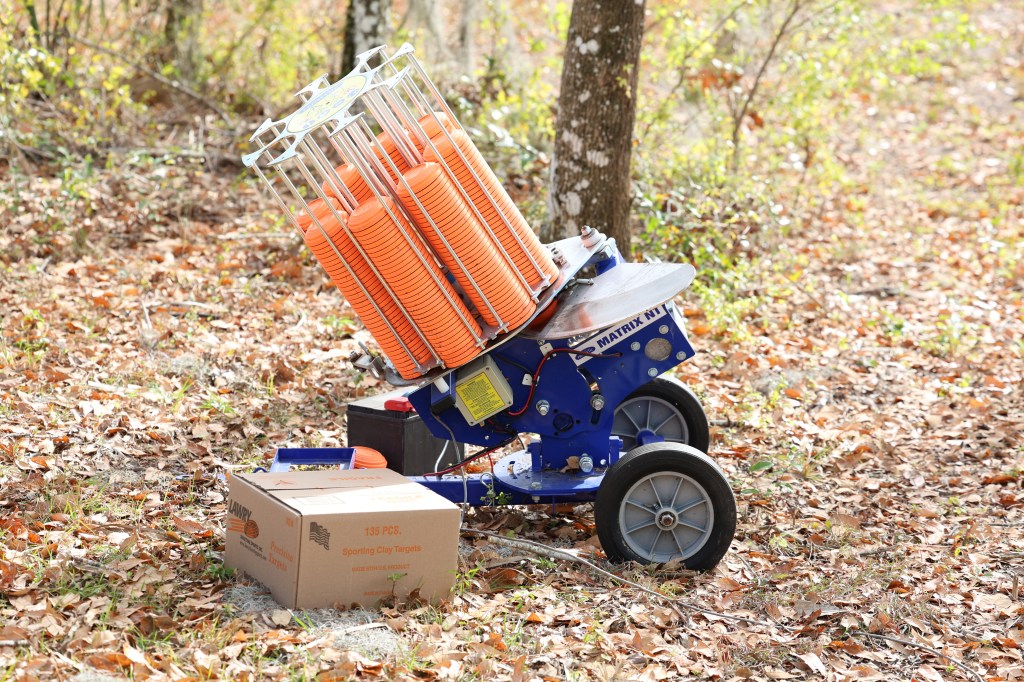
I suppose that’s progress.
I recently looked at the old gun club and noticed there’s even a gate now.
Probably safer.
Probably smarter.
But I couldn’t help laughing.
No Trap Boys. Automated machines. A gate keeping kids out after hours.
No wandering the fields.
No selling shells.
No terrible golf lessons.
No accidental grass fires.
And apparently, nowhere to take your date.
No fun at all.
Of course, I’m kidding.
Mostly.
Because looking back, what those men gave us wasn’t just a job.
They gave us responsibility and freedom at the same time.
We worked. We earned money. We learned from adults. We explored. We occasionally screwed up.
We learned from that too.
We were allowed to be kids.
And somewhere in all of it, without realizing it, we were becoming adults.
Today, when I watch my son call for a clay target and shoulder his shotgun, I sometimes think about those old concrete trap houses and the men who stopped beside a couple of kids on skateboards.
They couldn’t have known where any of us would end up.
They just gave us an opportunity.
Nearly forty years later, I’m still grateful they did.
And if I ever find another cigarette lighter lying on Covington Drive, I’m leaving it right where it is.

